



The aftermath of an accident may be characterized by confusion, frustration, and pain. You will have plenty of concerns without having to deal with insurance, rising medical bills, and the possibility of missing work. This is where we come into play.
There are several types of personal injury cases, and each requires a particular approach to ensure that your rights are respected and that you get the compensation you are entitled to. As one of Dallas’s most experienced personal injury law firms, the Rasansky | McKenzie Law will handle your case with professionalism, persistence, and your best interests in mind.
Don’t hesitate to get in touch with our team if you have concerns regarding how fault and negligence impact your Dallas personal injury claim. In the interim, read more to learn about how negligence impacts personal injury cases in the Lone Star State.
How is Negligence Defined in Texas?
Let’s start with a brief definition: negligence is a violation of the duty owed to others to protect them from the undue or unsafe risk of injury. And in Texas, there are five components to a negligence claim:
- Duty of care
- A breach of that duty of care
- Causation
- Proximate cause
- Damages
So, the state of Texas is a fault or at-fault state. Essentially, if you are injured in an accident in Texas, you have access to all available options. For instance, in the event of a car crash, you may file a claim with the at-fault driver’s insurance company or a lawsuit against the other driver.
What is a Duty of Care?
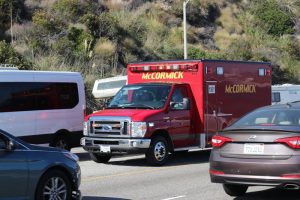 The existence of a duty of care to the plaintiff is the determining factor in negligence claims in Texas. The law creates a duty when it establishes a link between a plaintiff and a defendant and imposes an obligation on the defendant. In court, the judge will consider whether or not a reasonable person would assume obligation under the same circumstances, and the jury will decide whether or not the defendant’s conduct was reasonable. Simple, straightforward examples include a driver’s duty to not text while behind the wheel or a dog owner’s responsibility to keep their pet confined to their yard. State and federal legislation, workplace safety manuals, public safety regulations, and municipal mandates and ordinances are also common sources of legal obligations. From there, when one party fails to take reasonable care, that party may be considered negligent. When deciding whether or not there was a breach, a jury must consider evidence unique to each individual instance.
Cause and Proximate Cause in Texas
Cause, often referred to as actual cause, means the burden of proof rests on the claimant to show that the defendant’s conduct directly led to the plaintiff’s harm. This criterion is not met if the resulting damages would have occurred regardless of whether the defendant acted negligently or not. When it comes to proximate cause in Texas, the obligation of the potentially liable person must be shown to be sufficiently related to the resultant occurrence, and this can be done through direct proof or circumstantial evidence presented by the plaintiff. Put another way, “Is it plausible that the plaintiff’s accident was caused by the defendant’s breach of the standard of care?” Sometimes, the defendant’s acts set off a chain reaction that is too out of the ordinary to hold the defendant guilty.
Proving Negligence in Texas
To continue with the automobile accident analogy, if the other motorist is deemed at fault for the collision, their insurance company would be responsible for paying your medical costs, missed earnings, and any other damages. However, Texas employs a variant of the comparative blame standard in circumstances involving several parties’ negligence. In addition, if a vehicle accident case gets to trial, the jury will be asked to determine how much responsibility may be placed on each side based on the facts provided and the total amount of money the plaintiff deserves for their losses. A plaintiff in Texas will have their damages judgment reduced by an amount proportional to their culpability under the state’s modified comparative fault legislation. Consider the following: the jury decides that you get a total of $90,000 in damages, and hands down that decision. However, the jury concludes that you share 10% of the fault for the incident (maybe because you were driving too fast for the circumstances or because you forgot to signal in the instance of a car collision). Under Texas’s comparative negligence statutes, you are entitled to 90% of the total damages, or $81,000. Keep in mind that Texas is a “modified comparative negligence” or “fault” state, so if you are judged to be even half responsible for the occurrence, you will not be entitled to any financial compensation.
Call the Personal Injury Attorneys at Rasansky | McKenzie Law
In the aftermath of a serious accident, you should not hesitate to contact a Dallas personal injury attorney due to the legal intricacies of our state and the necessity for competent counsel. The good news is that you and your family may be entitled to compensation to help ease the burden of anticipated expenses. In Dallas, the Rasansky | McKenzie Law has been helping victims of accidents caused by negligent and reckless parties for over three decades. In addition, our team of experienced and reputable lawyers provides reliable legal counsel to our customers at every stage of the claim procedure. Contact our Dallas personal injury lawyers immediately if you were hurt in a Texas accident, including car crashes, dog bites, or falls. If you have any concerns regarding your legal situation and would like a free consultation with one of our lawyers, please call 214-617-1816. We’ll do all we can to help you win your case and get compensation for your injuries due to someone else’s carelessness.