Factors That Affect Case Value
- Medical costs: Current and future treatment, therapy, and assistive care
- Lost wages: Missed work and reduced earning capacity
- Severity of injuries: Whether the harm caused temporary or permanent disability
- Pain and suffering: Physical pain, mental anguish, and reduced quality of life
- Impact on daily life: Lifestyle changes, loss of independence, family burdens
- Degree of negligence: Whether the provider’s error was careless or egregious
- Pre-existing conditions: May affect damages, but do not excuse malpractice
Economic vs. Non-Economic Damages (Texas)
| Type of Damages | Examples | Limitations in Texas |
|---|---|---|
| Economic | Medical bills, rehabilitation, lost wages, loss of earning capacity | No cap — victims may recover the full amount proven |
| Non-Economic | Pain and suffering, mental anguish, loss of companionship | Capped at $250,000 per healthcare provider (since 2003 reform) |
| Punitive | In rare cases, awarded to punish reckless or intentional conduct | Capped under Texas law, based on multiples of economic damages |
Example: A patient with lifelong disabilities from malpractice may recover millions in economic damages for lifetime care, while non-economic damages are capped at $250,000.
Next step: If you believe you have a malpractice claim, speak with an attorney who can evaluate your case. Every situation is unique, and state laws like Texas damage caps will affect your potential recovery.
What factors increase the value of a medical malpractice settlement?
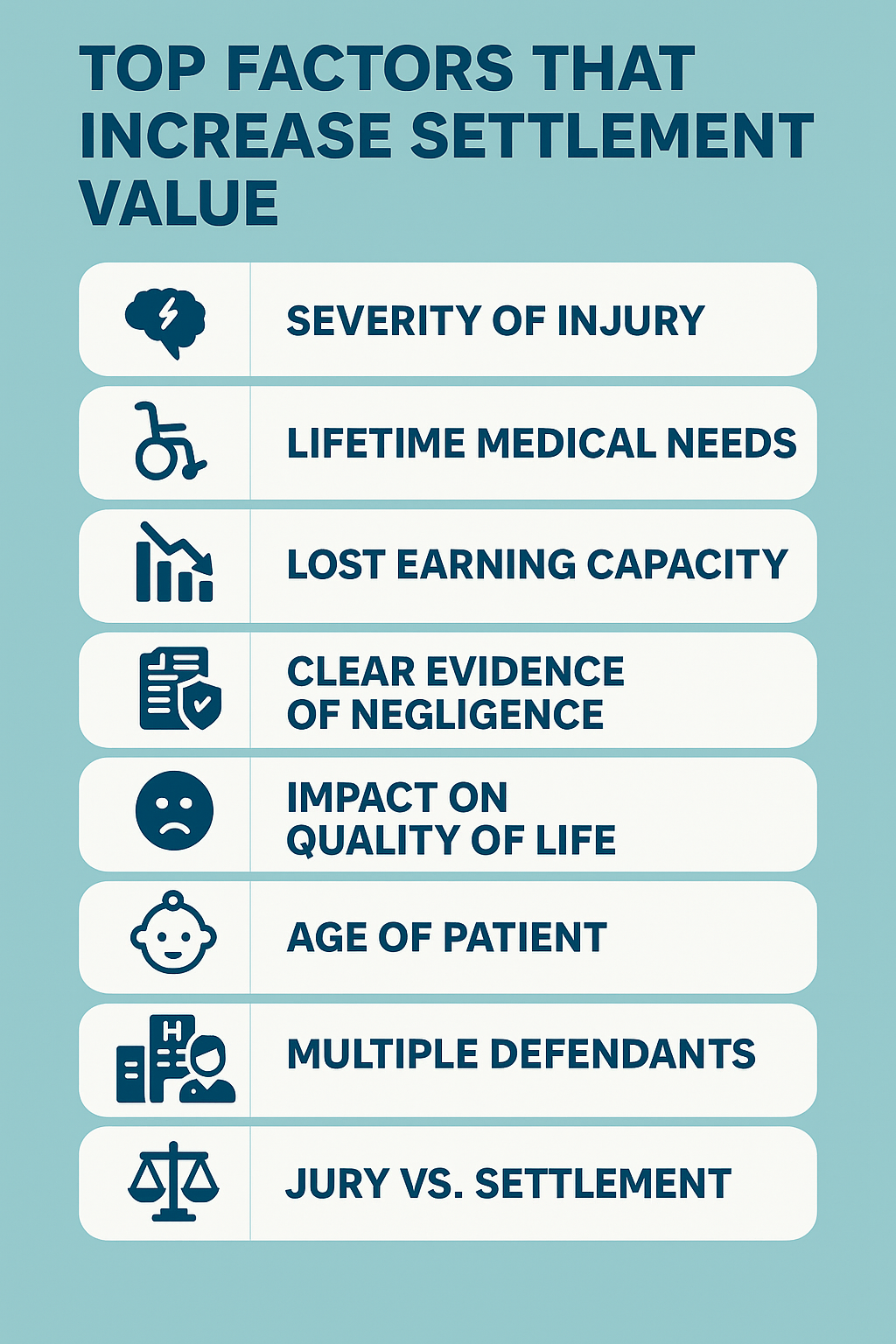
The value of a medical malpractice settlement depends on several factors. Cases involving severe injuries, lifelong care needs, or clear evidence of negligence typically result in higher compensation.
Key Factors That Can Increase Settlement Value
- Severity of injury: Catastrophic or permanent injuries (e.g., brain damage, paralysis, cerebral palsy) result in higher awards.
- Lifetime medical needs: Cases requiring long-term nursing care, multiple surgeries, or adaptive equipment increase damages.
- Lost earning capacity: If the injury prevents the patient from working, compensation includes projected lifetime income losses.
- Clear evidence of negligence: Strong documentation, expert testimony, or blatant medical errors (e.g., wrong-site surgery) strengthen the case.
- Impact on quality of life: Chronic pain, loss of independence, or emotional suffering raises non-economic damages (subject to Texas caps).
- Age of patient: Younger victims often receive higher compensation because of longer expected lifetime care costs.
- Multiple defendants: In Texas, damages may increase if both a doctor and a hospital are found negligent.
- Jury vs. settlement: Cases that go to trial with compelling evidence may result in larger jury verdicts than negotiated settlements.
⚠️ Texas note: While economic damages (medical bills, lost income) are uncapped, non-economic damages (pain and suffering) are capped at $250,000 per healthcare provider. This cap does not apply to economic losses, which often make up the largest portion of high-value cases.
Next step: An experienced attorney can calculate both immediate and lifetime costs to maximize settlement value. Call the Dallas medical malpractice attorneys at Rasansky | McKenzie Law at (214) 367-6793 for a free consultation.