

Some personal injury lawsuits are historically important and set important precedents which have a lasting effect on the legal landscape.
Palsgraf v. Long Island RR
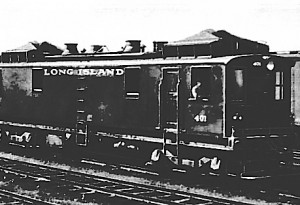
Palsgraf v. Long Island Railroad
In order for an injured party to collect for personal injury damages, the party must have evidence to support its claim the defendant owed the plaintiff a duty of care. In this case, the final determination was that Long Island Railroad did not owe a duty of care regarding the package. This standard would not have applied had Mrs. Palsgraf been injured if objects as fallen from a train as it passed by.
Falzone v. Busch
Falzone v. Busch
Mabel Falzone, wife of Charles, was not injured by the impact of the crash, but as the car veered across the roadway in the direction of the car in which she was sitting, she felt fearful for her safety which caused her to need medical attention due to illness that resulted from her fear.
The state of New Jersey does not have any provision for collecting damages for bodily injury of sickness when there is no physical impact involved. New Jersey’s stand is that generally a person does not suffer illness as a result of fright.
Trimarco v. Klein
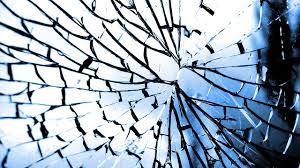
Trimarco v. Klein
The defendants in the lawsuit owned the building where the plaintiff was injured by the shattered glass, and they had not used shatterproof glass (as is common practice) but ordinary glass for the tub enclosure.
The question in this case is whether the actions of the defendants prove they failed to act appropriately under the circumstances. While the original court acted in favor of the plaintiff, the Appellate Division reversed that decision and dismissed the complaint.
Martin v. Herzog
Martin v. Herzog
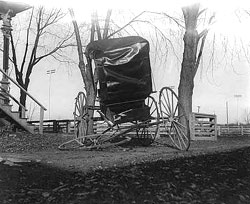
The plaintiff in this case was killed when a car driven by the defendant struck his buggy. The defendant argued that the plaintiff’s buggy lacked lights and requested a ruling that showed this to be contributory negligence.
Setting aside the facts of the case, there is some question here of whether the plaintiff was at least partly at fault for the accident and his resulting death. It was dark, and there were no lights on the buggy which was clearly a violation of a statute.
While the trial court found in favor of the plaintiff, the appellate court reversed the decision which the plaintiff also appealed.
Negri v. Stop and Shop
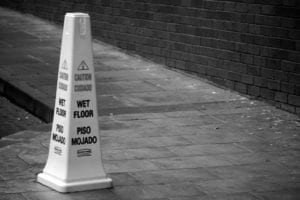
Negri v. Stop and Shop
Even though the jury found in favor of Negri, the Appellate Division of the New York Supreme Court dismissed the complaint.
This reversal was based on the fact the defendant provided evidence, though circumstantial, that showed the store provided sufficient notification of the hazardous condition. This evidence supports the stand that while a store has an obligation to protect its customers, they did not have cause for a lawsuit in cases where there is sufficient warning of hazardous situations.
Summers v. Tice

Summers v. Tice
The evidence did not point to which one of the defendants actually fired the shot that hit Summers, so he filed a personal injury lawsuit against both hunters. Although the trial court found in favor of Summers, Tice and Somonson appealed on the basis there was not enough evidence to determine which one of them was the cause of Summer’s injuries. The appeals court upheld the ruling. This decision is the fairest one since it is impossible to determine how much damage each defendant caused and unfair for the injured party to be denied damages because of a lack of knowledge regarding which party caused the injuries to the plaintiff.
Sullivan v. Dunham
Sullivan v. Dunham
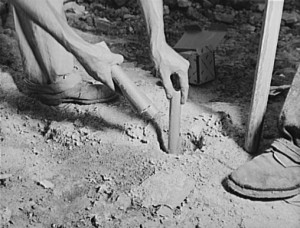
The lawsuit was initiated in order to recover damages for the next of kin for what was believed to be an act of wrongful death as a result of actions by the defendants. During the first trial a judgment was issued in the plaintiff’s favor but reversed on appeal because of errors in the ruling, but during the second trial the ruling was affirmed. In spite of the defendant’s appeal, the judgment was affirmed. Even though the act was legal and on private land, the fact that it cased an entry onto public land (the roadway) made it an issue of negligence.
Escola v. Coca Cola
Escola v. Coca Cola
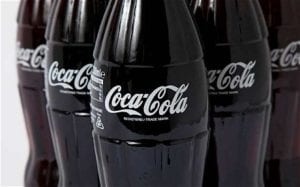
The court examined the record and determined there was nothing to support the possibility the restaurant did anything to cause the bottle to break after it was delivered from the manufacturer. They ruled the bottle itself was defective at the time the defendant delivered it to the restaurant since bottles of carbonated liquids that are properly prepared simply do not explode when they are handled carefully.
Soule v. General Motors
Soule v. General Motors
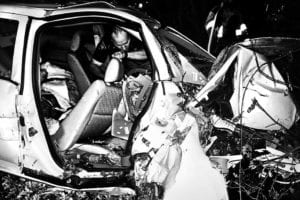
The trial jury awarded the plaintiff $1.65 million, an amount the Court of Appeals affirmed. General Motors argued under appeal that the court was wrong in its decision because of it was a complex design-defect case. It also failed to provide General Motors any special instruction on the cause of the problem. The court felt there would have been no difference in the end result in spite of the improper instruction.