


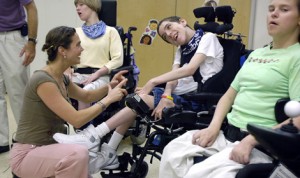
Muscle atrophy can be a concern for people with ataxic cerebral palsy because of the lack of use some muscles will get. Sometimes muscles may even become rigid, leading to bone deformity underneath. Fortunately the deformities tend to be less prevalent than they are for those affected by spastic forms of CP. In some cases malnutrition becomes an issue due to feeding difficulties and trouble with coordinating chewing and swallowing. Although some types of cerebral palsy are recognized soon after birth, ataxic tends to become noticeable a little later (often between 3 and 18 months of age).
As with any form of CP, treatment is very important. For ataxic cerebral palsy patients, physical therapy can improve balance, coordination and help keep muscles strong. Conductive therapy is also sometimes used. In this treatment, tasks are broken down into smaller steps and, in this way, are helpful to ataxic CP patients because they develop fine motor skills. This therapy is intensive, requiring more time than physical therapy. Medication may also be a treatment consideration, but is not as commonly used as in other forms of CP.
Cerebral palsy is a non-progressive condition, meaning that it will not worsen over time, but it can take a toll on a person’s body that will present additional challenges over time. The unfortunate truth is many cases of CP are the result of errors during prenatal care or labor and delivery. If your baby has brain damage that you feel resulted from a medical error, you should speak with a qualified birth injury lawyer. We regularly deal with birth injury cases and would be happy to provide you with a free assessment of your case. Call the Rasansky | McKenzie Law today at (214) 651-6100 and speak with one of our highly trained Dallas birth injury attorneys.