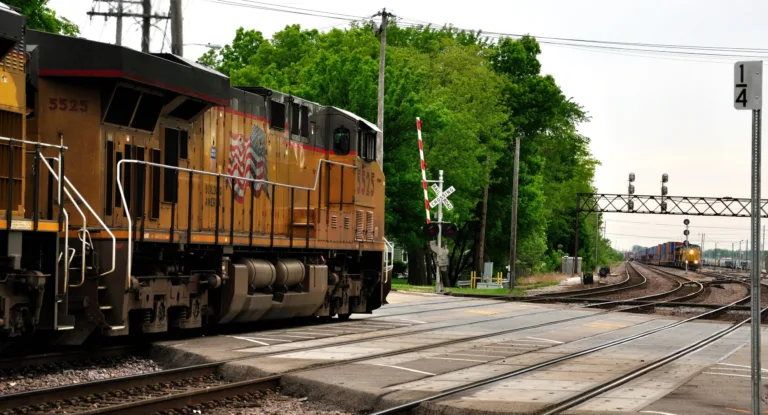
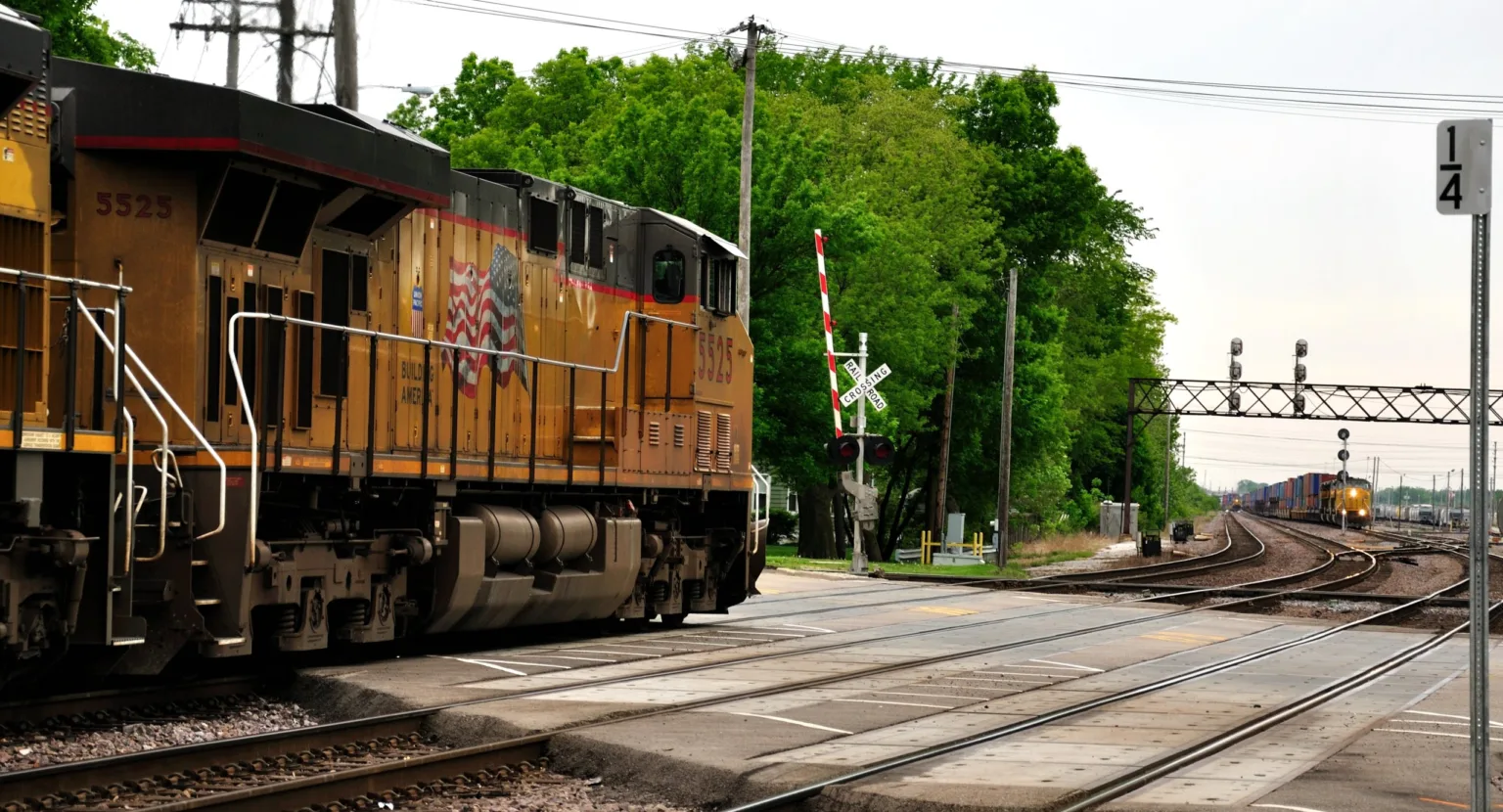
This month we covered the tragic story of a promising Texas high school basketball player who was killed when he accidentally drove in front of an oncoming train. Train and car collisions like these happen more often than you might think even though most are preventable. In fact, a train and car collision happens about every 90 minutes in the United States.
Here are tips to help you prevent railroad crossing accidents in Texas.
Understand that trains do not have the ability to stop quickly. A freight train traveling 50 miles per hour requires almost two miles to come to a stop, while a commuter train traveling 80 miles per hour requires 1/8 of a mile to stop.
Never, ever go around a railroad gate – whether you are walking, riding a bike, riding a motorcycle, or in a car. In fact, you should stop at least 15 feet from a closing railroad gate.
Remember that some vehicles are required to stop at ALL railroad crossings – vehicles including buses, trucks carrying hazardous materials, and heavy equipped such as tractors.
Look and listen when crossing any railroad tracks, even if warning lights aren’t flashing. Realize that even tracks that you have never before seen in use could have train traffic.
Don’t stop on train tracks, as you risk becoming boxed in or stalled out with a train approaching. Leave several yards on either side of a train track when stopped in traffic.
Don’t walk on train tracks – it is dangerous and illegal.
Realize that most trains do not travel on set schedules, and a train can appear at a crossing at any time.
This month we covered the tragic story of a promising Texas high school basketball player who was killed when he accidentally drove in front of an oncoming train. Train and car collisions like these happen more often than you might think even though most are preventable. In fact, a train and car collision happens about every 90 minutes in the United States.
Here are tips to help you prevent railroad crossing accidents in Texas.
Understand that trains do not have the ability to stop quickly. A freight train traveling 50 miles per hour requires almost two miles to come to a stop, while a commuter train traveling 80 miles per hour requires 1/8 of a mile to stop.
Never, ever go around a railroad gate – whether you are walking, riding a bike, riding a motorcycle, or in a car. In fact, you should stop at least 15 feet from a closing railroad gate.
Remember that some vehicles are required to stop at ALL railroad crossings – vehicles including buses, trucks carrying hazardous materials, and heavy equipped such as tractors.
Look and listen when crossing any railroad tracks, even if warning lights aren’t flashing. Realize that even tracks that you have never before seen in use could have train traffic.
Don’t stop on train tracks, as you risk becoming boxed in or stalled out with a train approaching. Leave several yards on either side of a train track when stopped in traffic.
Don’t walk on train tracks – it is dangerous and illegal.
Realize that most trains do not travel on set schedules, and a train can appear at a crossing at any time.
About the Author
Anyone can hire a lawyer, but if you want to give yourself the best possible chance at success, call the experienced attorneys at Rasansky McKenzie. You only get one chance to bring your case before a court. Let them put their expertise to work for you.
Website developed in accordance with Web Content Accessibility Guidelines 2.2.
If you encounter any issues while using this site, please contact us: 214.651.6100